ARBI CITY shares expertise on self-hosted AI solutions at Pydata event
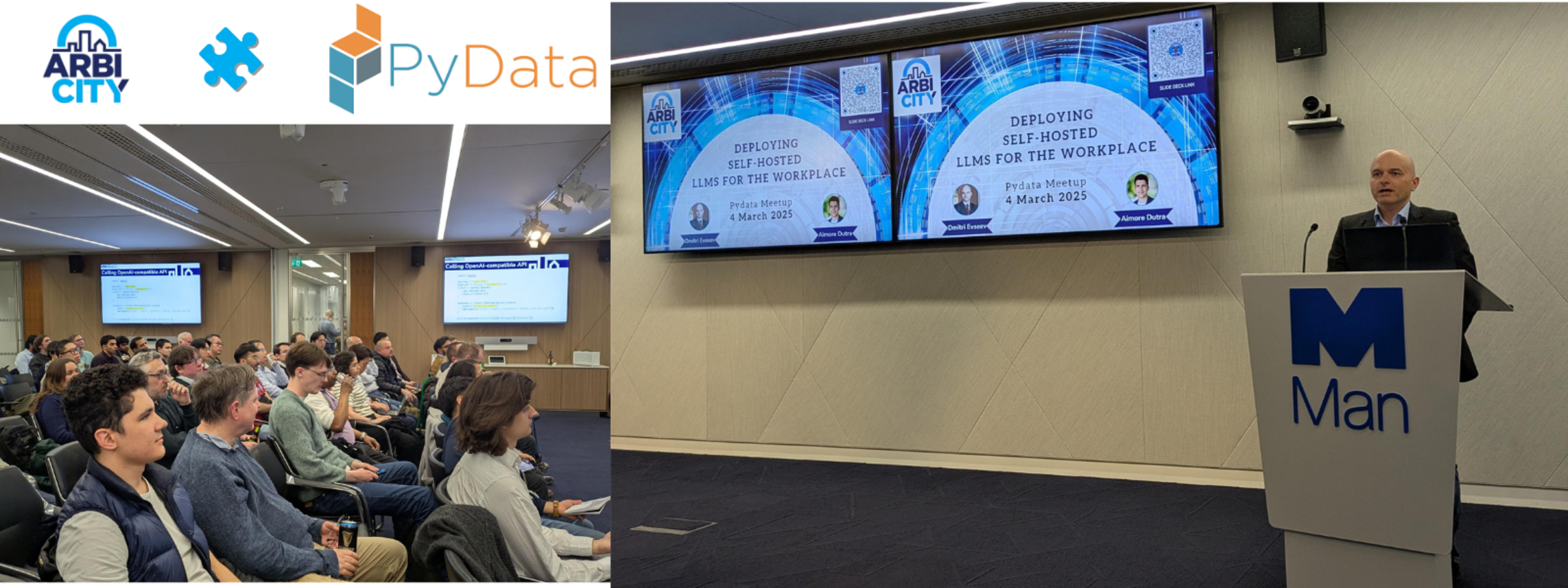
ARBI CITY’s Dmitri Evseev and Aimore Dutra recently presented at Pydata’s London Meetup on a subject that is increasingly relevant for the legal world: how to bring artificial intelligence in-house safely, securely and effectively.
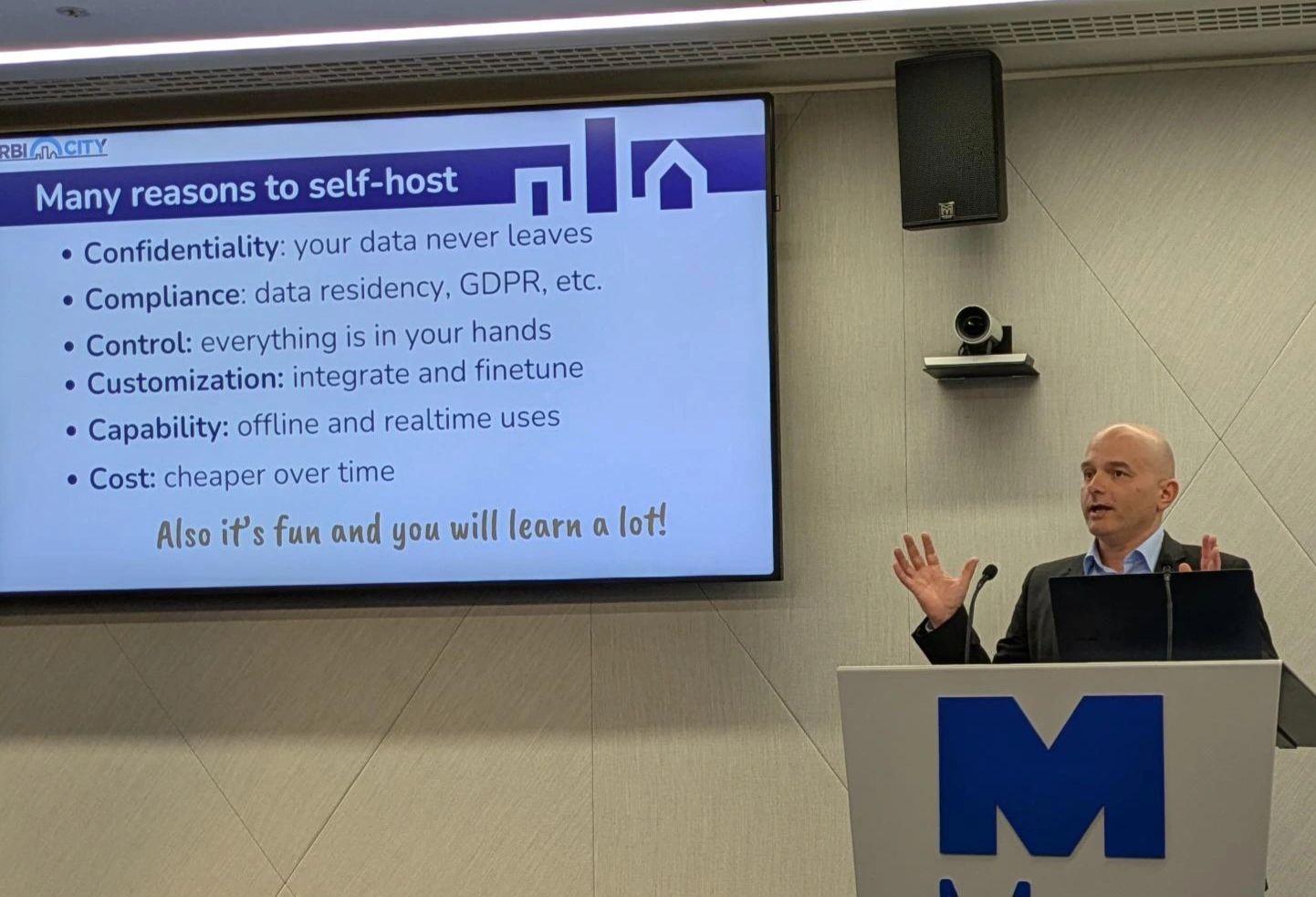
Their presentations focused on the self-hosting of large language models (LLMs) — a way for organisations to run AI tools on their own systems rather than sending sensitive data to third-party platforms.
The event proved highly popular, with over 200 signups within hours of being posted on London's Pydata website, and had many AI engineers and data scientists in attendance. This highly technical audience provided a number of insightful questions and comments on the topic.
Why does self-hosting matter for legal teams?
Choosing to self-host gives law firms and legal departments full control over their data, helping to ensure client confidentiality, meet compliance obligations and tailor AI tools to specific legal workflows. Whether it's reviewing documents, generating summaries or searching through internal work product, the ability to run these tools privately and securely is a major advantage.
Dmitri and Aimore explored the different ways self-hosted AI can be set up — including using private cloud infrastructure, small on-site devices or even fully offline environments.
Navigating pitfalls
Both also touched on how legal teams can avoid common AI pitfalls like slow performance, rising costs or inaccurate answers. In this vein, Aimore presented a live demonstration of how LLMs “remember” the context of a request and why feeding them too much information at once can cause confusion or vague responses. For legal applications, where clarity and accuracy are highly important, understanding this is crucial.
The talk was well received, especially in light of the current landscape where legal professionals are navigating how to use AI without compromising on privacy or professional standards.
At ARBI CITY, we’re excited to keep building AI solutions that empower lawyers to work smarter, faster and more securely, and that meet the needs of the legal profession.